Showing posts with label costume. Show all posts

Thursday, 21 May 2020

Fashion and fetishism

Why do clothing and fetishism often go together? How to explain clothing fetishism?

The word ‘fetishism’ has a long and very complex story. It is first used in French by Charles de Brosses, a colonist of the eighteenth century to refer to the cult that ancient pagan religions pay to material objects. These sacred material things are called fetishes. In these times, fetishism is considered to be a feature of underdeveloped civilizations and bears a negative connotation. Fetishism is perceived as a set of superstitious beliefs opposed to the rationality prevailing in the Century of Enlightenment in Europe. 

Psychoanalysis and Marxist economy have in a way extracted fetishism from its colonial anchorage. Freud observes that among his patients, some of them demonstrate a fetishist behavior: 
they have erotic desire for inanimate objects, or to be more precise, they cannot feel sexually aroused or satisfied if they miss a certain type of inanimate object. 
Freud’s interpretation is that the fetish "is a substitute for the woman’s (the mother’s) penis that the little boy once believed in and... does not want to give up.... if a woman has been castrated, then his own possession of a penis was in danger." So according to Freud, fetishism is a solution to the castration complex coming from childhood experience of the gender alterity.

https://www.amazon.com/Fashion-Fetishism-Corsets-Tight-Lacing-Body-Sculpture/dp/0750938080

Two questions follow then: 
1/ are there privileged objects for fetishism? 
2/ are men the only fetishists? 


Freud observes that the organs or objects chosen as substitutes for the absent female phallus are not necessarily symbols of the penis. It seems rather that when the fetish is instituted some process occurs which reminds one of the stopping of memory in the original traumatic situation. It is as though the last impression before the traumatic one is retained as a fetish. Thus as Freud says, "the foot or shoe owes its preference as a fetish to the circumstance that the inquisitive boy peered at the woman’s genitals from below, from her legs up; fur and velvet are a fixation of the sight of the pubic hair; pieces of underclothing, which are so often chosen as a fetish, crystallize the moment of undressing, the last moment in which the woman could still be regarded as phallic". This is why corsets, shoes and boots, underwear but also leather pieces that are often treated as a second skin, are favorite items for fetishist practices and symbols of this subculture.

https://indie-mag.com/2018/03/fetishism-in-fashion/
Because fetishism is an answer to the castration complex, it would appear at first that fetishism is strictly a masculine sort of behavior. In a recent book on fashion and fetishism, fashion historian Valerie Steele notes as well that fetishism is more widespread among men than women. But in an earlier text on fetishism, Freud said that "all women are clothes fetishists". He also adds that even the most intelligent of them follow demands of fashion, even if it is not to their advantage. It is difficult to forget the phallocentric character of the psychoanalytic take on fetishism and to go beyond these obviously misogynist reflections but it is interesting for us to discuss the possibility of an equivalent to fetishism for women, and to the specific function of fashion in this context. 
According to Freud, feminine fetishism for clothes in general has to be explained according to the woman’s quest for the phallus which is the symbol for masculine power in Freudian theory. But it would be too simple just to say that clothes are fetish for women because they make them more appealing to men.
It seems, on the opposite, that women enjoy clothes not because of the mens’ gaze, but because clothes play a role in their own identity process. Women, exactly as men, make use of fetishes to feel complete, to feel as a whole, and to conjure up the threat that the original discovery of the gender difference might have caused. But why is fashion relevant in this case? Probably because the fetish is by definition an illusion: the fetish takes the place of the missing phallus, it is a fiction about something missing. So no actual single object can really fill that void, and the subject is doomed to try one object after the other and keeps looking for the right fetish that only exists as a fantasy.


Hence the power of fashion and its constant shifts: the success of fashion is based on the fetishistic relationship to clothes. 
As we want our clothes to fill a gap that cannot be filled, we only derive partial and temporary satisfaction out of them and need new dress all the time. It is quite interesting that, from the years 1960’s on to now, mainstream fashion has adopted many of the codes of the fetishist subculture: leather, rubber, cruel shoes, tattoos, body-piercing, underwear as outerwear, corsets, which were all more or less dedicated to private and special use, became quite common on catwalks and advertising campaigns, pervading even high street fashion. Designers like Vivienne Westwood, Gianni Versace, Alexander McQueen, Jean-Paul Gaultier or John Galliano have contributed to put fetishist outfits on the public place, and to promote a sexual chic style that owes a lot to a sartorial material that was considered evidence for perverted habits. This long lasting fashion trend has been criticized both for degrading the woman’s image, and for spoiling the true fetish culture, making it too commercial and meaningless.


Fashion clothes are also a surface one projects her own fantasies onto: they help us to imagine other identities for ourselves, and to build new identities for ourselves. And as Freud and many other authors have established, sexual life is critical in the definition and construction of the self, so it is no mystery that clothes in general, being so intimately connected to the body, bear so many sexual connotations.
Feminist critics have attacked these uses of fetishist references as positioning women as objects or victims. It might hold in some cases, but in many others, women wearing these kinds of outfits were on the opposite pictured as dominant, strong and free. As Valerie Steele has written, "the attraction that many women have to fashion—and fetish fashion, in particular—may be related to their desire to assert themselves as independent sexual beings". It might be a good explanation, after all, for the sex appeal of the inorganic that Walter Benjamin associated to the cult of the commodities in the modern era. Fashion clothes are not only ways to cover oneself, or to express one’s personality, social role, or current mood.

Thursday, 14 May 2020

Avant garde fashion and its political role

Avant garde fashion and its political role


Caroline Evans is professor of history and fashion theory at the Central Saint Martins School in London and published Fashion at the edge in 2003. She proposes a reflection on the work of designers such as Rei Kawakubo, Yohji Yamamoto, Martin Margiela or Viktor&Rolf, whom she defines as “experimental”, opposed to commercial, “conventional or generalist” fashion.
If the latter appears as “an ingredient of the process of civilization” (N. Elias), the “avant-garde” fashion would rather reveal a “neurotic symptom”, a resurgence of “repressed desires and anxieties” of the late 20th century. Often also referred to as “conceptual”, “anti-fashion”, or related to the notion of “deconstruction” (see the writings of Y. Kawamura or B. English), the work of Issey Miyake, Rei Kawakubo, Yohji Yamamoto, Martin Margiela, the “Antwerp Six”, or Hussein Chalayan and Helmut Lang, is very important if one chooses to focus on the political role of fashion. Finally, let us look at how their creations take a critical position through a study of the second generation of Japanese designers in Paris (Rei Kawakubo, Yohji Yamamoto), and Martin Margiela’s work.
The Japanese and the questioning of Western conventions
Respectively born in 1942 and 1943, Rei Kawakubo and Yohji Yamomoto both grew up in the context of post-war Japanese austerity, before presenting a joint collection in 1981 in Paris. Worn, torn, with impressive volumes, the clothes are associated by some critics with a “post-Hiroshima” aesthetic, an “aesthetic of poverty” (Harold Koda, American Vogue, April 1983). They specifically target two foundations of Western fashion:
1. A reassessment of the notion of perfection


First of all, they propose a reassessment of the notion of perfection. Yohji Yamomoto wants to report on the effects of time on his clothes. This is how he evokes it:
“In his lifetime, a human being ages. Similarly, textiles, which is a living material, is getting older. If they are allowed to age for a year or two, the fibres naturally tighten up and the charm of the fabric increases (…) That’s why vintage clothes sometimes make me feel fiercely jealous (…) This paradox of design is in my opinion an essential question, that I am constantly trying to solve”
To do this, he operates various processes of washing, crumpling, raw cutting. The collections of Winter 1981-1982, Summer 1984, or Winter 1984-1985 illustrate the quest for imperfection: while the first one plays with raw wool, rustic knits, the second one is inspired by photographs of August Sander’s anonymous farmers, and the last one features clothes with visible seams, coats resembling blankets, in addition to numerous raw cuts.
Rei Kawakubo, on the other hand, is looking for something new in accident. For this reason, she develops a special relationship with the machines that her team disrupts by sometimes removing a nut or computer program to vary the irregularities. But she also tries to mimic the patina on her clothes as she did in the summer of 1983. 
This re-evaluation of the notion of perfection will also take shape in their use of asymmetry. Rei Kawakubo thus diverts the garment from its primary function. Her tunics were transformed into shawls in 1981, the sleeves and buttons removed in March 1983. Yohji Yamamoto extends sleeves, shortens pants, lowers buttons, or moves pockets (Winter 1985-1986).
2. Rethinking the relationship between clothing and gender
The two designers rethink the relationship between clothing and gender. The choice of the name “Comme des Garçons” appears here as a desire to free women from clothing conventions. Rei Kawakubo develops a hostility towards the “body conscious”, no more considering clothing as intended to enhance the female forms. The Autumn-Winter 1983-1984 show is an illustration: the woman’s body is cancelled, her hips, waist, buttocks, and hair disappearing under the layers of fabric.
Yohji Yamamoto criticizes the virility that he defines as an instrument of control. He aims at deconstructing the Western male costume inherited from Savile Row. To do this, it removes or rounds off traditionally padded shoulders, moves buttons or pockets, exaggerates hems, and shortens the length of trousers.


Martin Margiela, “the ethics of style” (O. Zahm, 1994)
Launching his first collection in 1988, Martin Margiela develops general reflection on the foundations of his discipline, in particular by criticizing the notion of “new” in fashion, as well as its “spectacular” character.
1. Rethinking the time of fashion
Defined by the Situationist International (SI) as “the reuse in a new unit of pre-existing artistic elements”, the technique of “detournement” is central to capture the first aspect of Martin Margiela’s work. In this way, he introduces a critique of perpetual change by diverting old clothes and reusing some previously used materials in his craft collection. Dozens of old sandals were dedicated to making a top for Summer 2006, several old scarves for a long skirt (Summer 1992), or several military socks for a sweater (Winter 1992).
Similarly, its Replica collections (lines 4 and 14, launched in 2003 and 2004) aim to reproduce anonymous and unscratched old clothes from different historical periods. A doctor’s jacket from the 1920s was resurrected for Summer 2005, like a French costume jacket from the 1970s or an old aviator’s jacket for Winter 2005-2006. 
Martin Margiela therefore rethinks the relationship between fashion and time. It is no longer a question of running away from it in a cyclical and continuous change, but of using it as a language in its own right.
2. A critique of “fashion spectacle”
Then, the Belgian designer makes a formidable criticism of the spectacular nature of fashion. 
His propensity to dissolve into the collective contrasts radically with the cult of the individual in the 1980s fashion world, magnified by his mentor J.P. Gaultier. Anonymity appears to be the basis of his project. He does not resolve to make any public appearances, limits interviews, and leaves his labels blank until 1997. This relationship to anonymity is also visible during collection presentations. The faces of the models are covered with masks without holes in the AW 1995-1996, Winter 1998, half painted for Winter 1996-1997, or hidden under pure fringes in Winter 2000-2001.

Priority is also sometimes given to her team, as in Summer 1998, or 1999, when she is the one who presents herself to the public.
As the second generation of Japanese, Martin Margiela is a strong critic of fashion. If the first ones aimed at challenging the Western conception of clothing around a reevaluation of the notion of perfection and a questioning of a gendered conception of the costume, the Belgian designer will defend a clothing archaeology, as well as a criticism of “the fashion spectacle”.
By studying these various works, we can clearly see to what extent fashion can also be used as a critical support.

Tuesday, 12 May 2020

Fashion: a way to look alike AND to stand out

Is fashion a distinction or imitation?

The German sociologist Georg Simmel (1858-1918), as well as the American linguist Edward Sapir (1884-1939), have both taken interest in the somewhat paradoxical nature of fashion: it appears to be as much of a way for the individual to imitate the social group, as a way to distinguish herself from the mass. From a literary perspective, the French author Honoré de Balzac appears to be the first to identify fashion as a principle of distinction of the self. In his famous essay "Treatise on elegant living", published in 1830, he dwells on the analysis of the codes of "the elegant living", a concept widely inspired by guides of manners and other protocol books, which were popular at the time. Balzac draws from his own social experience the template of "social climbing" through the mastering of the clothing codes, as demonstrated in his novels by the path of characters such as Rastignac (Father Goriot) or Lucien de Rubempré (Lost llusions). 
In 1905, Georg Simmel offered a sociological perspective of fashion by observing two interesting phenomena: on the one hand, he seeks to explain fashion’s necessary convergence in taste: what drives individuals to dress the same, in a determined time and location?
The second problem he encounters lies in the instability of this "convergence phenomenon": why are preferences so quickly renewed, within the same social group? In other words, for Simmel, fashion stands, from a sociological point of view, as a curious phenomenon of "unstable regularity". Simmel tackles the paradox of fashion through the anthropological concepts of imitation and differentiation.
Imitation is defined as an "economical" behavior: when the individual imitates one or several members of his group, he is in fact preserved from the "torment of choice". It is, for Simmel, the primary stage of the development of the individual in society. He explains the rise of the common fashion taste by the instinctive inclination towards imitation: to dress like the group is in a sense "easier", as the individual is preserved from the cost of the psychologic effort an autonomous clothing decision may induce. That leaves us with the other aspect of fashion, meaning its instability throughout time.
Simmel uses, on that matter, another anthropological principle: the individual aspiration to distinguish oneself, which is "the next step" in the behavioral evolution of the individual. When she accesses this more "advanced" state of being, the individual places personal interest as well as future consideration as center of her motivations scheme, whereas imitation favors the preservation of what is already achieved and the perpetuation of well-installed habits. Taking inspiration from Adam Smith, Simmel extends his "Trickle-down economics" theory to fashion: as he observes the phenomenon of lower social categories imitating ruling social categories’ habits, he also determines that it couldn’t cause the shift of styles throughout time. According to him, this particular shift is caused by the ruling classes’ will to distinguish themselves from the others: "Social advance above all is favorable to the rapid change of fashion, for it capacitates lower classes so much for imitation of upper ones, and thus the process characterized above, according to which every higher set throws aside a fashion the moment a lower set adopts it". On the matter of fashion’s inconsistency, the American linguist Edward Sapir provides a genealogical study of fashion movements: they begin as a deviation from the institutional norm, and then, they are adopted by wider audiences, turning a "deviant behavior" into a new norm to follow. According to Sapir, fashion is the story of the spreading and the validation of individual deviations from the norm, or what he specifically calls the "custom": shifts are caused by individual moves, while it is for the group to validate them.
Simmel’s theory comes with a critic of fashion as a system: for him, fashion supports and increases the social division as the richer are presented as a model to follow, that no one cares to question. By allowing elites to keep differentiating themselves from their followers through new styles, fashion doesn’t reduce the distance between social categories. for him, fashion is insignificant, as no objective criteria of aesthetics or functionality prevails in the shifts that orchestrate its rhythm. fashion is the sign of nothing other than the desire of powerful social groups to manifest their overlooking status.

Sapir distinguishes between two "validating" profiles: 
*those who adopt shifts "by conscious interest", in order not to appear as “members of a past generation or dull people who cannot keep up with their neighbors", 
*those who actively participate to the renewal dynamic, because they "realize most keenly the problem of reconciling individual freedom with social conformity which is implicit in the very fact of fashion" 
Fashion, for Sapir, is the answer to the profound desire of the individual to emancipate herself from the ruling principles of society, from "the customs". Through the stylistic changes it imposes, fashion demonstrates a "step aside" from the norm, 
while being a form of social expression: being fashionable is to adopt new styles as they become popular, and to differentiate oneself from those who stick to a conservative appearance, dictated by customs.
Sapir offers another conclusion on this matter: for him, fashion cannot be reduced to the vain whims of an elite looking for statutory validation. By distinguishing between the transitory fads and true ‘Fashion’, Sapir observes that "those features of fashion which do not configurate correctly with the unconscious system of meanings characteristic of the given culture are relatively insecure". In other words, according to Sapir, fashion is absolutely not arbitrary: it expresses the beliefs, the desires, the anguishes, a whole unconscious collective imaginary. The only problem lies in our capacity to interpret fashion’s discourse, and as Sapir recognizes, it is not an easy task, since fashion’s meanings are culturally and contextually determined.
 As Sapir writes: “The chief difficulty of understanding fashion in its apparent vagaries is the lack of exact knowledge of the unconscious symbolisms attaching to forms, colors, textures, postures and other expressive elements in a given culture”.
https://www.drapersonline.com/retail/the-imitation-game-fashions-intellectual-property-crisis/7033992.article


Thursday, 23 April 2020

fashion icons - from renaissance to baroque

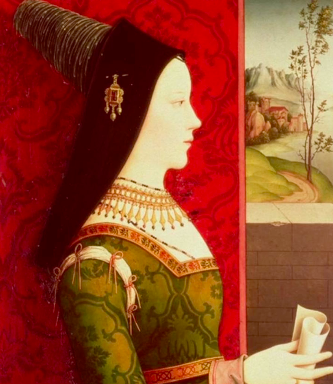
every designer should know its label and its history and be able to draw from styles of history for inspiration, from the renaissance to the swinging 60s.

 main influencers

DUCHY OF BURGUNDY

PUFFED SHOULDER - the bigger the higher the status, and a nipped waist 
SLASHING- became popular during this period swell, first by soldiers, adding royal fabric scraps to their slashed clothes


designers who have emulated this: 
fendi/ j.w Anderson / YAMAOTO/ DIOR/sass and bibe 
 fendi
 j.w Anderson

 dior

THE TUDORS

Henry VIII - large silhouette, expensive materials, opulent golds and deep burgundy reds, expensive furs. Over the years the slashed puffed shoulders get bigger and bigger (along with his girth) always several layers, the minimum of 4, elaborated embroidery for both male and female, which continued over the centuries. 
mens fashion - wide and square (strong powerful)
women fashion - conical (meek humble slim)


current designers don't just pick an element the often focus on the mood of the style

eg. McQueen , JPG, Zimmerman, D&G


Louis XIV The Sun King
from Renaissance to Baroque a reign of 72 years
more decadent and luxurious. fashion music art and architecture were all flourishing at this time.
Louis was often dressed in ermine and silk brocade. ruff collars were altered - softened and flattened to lie against the neck and clothes. the term "baroque" was used to define the fashion and art movement of the term.


baroque:"relating to or denoting a style of European architecture, music, and art of the 17th and 18th centuries that followed Mannerism and is characterized by ornate detail. In architecture the period is exemplified by the palace of Versailles and by the work of Wren in England. Major composers include Vivaldi, Bach, and Handel; Caravaggio and Rubens are important baroque artists"

marriage was of course a political manoeuvre, Louis was married to Maria Therese of Spain. the female style was an open neckline and flattened chest shape, with full skirts shaped my panniers underneath. draping and swagging were often combined over this.  


designers who have used the baroque period in design include: Dior, Christian LaCroix, Givenchy


Friday, 19 August 2016

FASHION: fashion shooting MODERN LADY 优家画报

Started working as a dressing assistant for 优家画报 MODERN LADY
the only weekly women's fashion magazine in china. 
So having helped open and prepare outfits the day before, on Sunday we headed to a car shop/show room to take shots with a polish model 拍摄 


Interesting to see how it all went together. With brands such a renown international brands like fendi, diesel and Burberry And also Chinese brand names. We contrasted between a freezing fitting room 试衣间 to the car auto part area, melting in the heat, the model layered up in outfits in over 30* heat. The shooting started around 9 before finishing up around 4. Using car parts, the auto spares shop floor and cars as props: seeing the model lying under cars, and on top of motor parts. Not a comfortable job at all: the photographer 摄影家 spoke in basic English about poses to the model 摆造型 and worked with a large team for lighting, equipment and editing. There's a lot put into it for just a couple pictures, dressers, editors, camera crew,Model. And a lot of different responsibilities, before during and after. Definitely able to look at things in a different perspective. 


I personally loved the style. Very biker rock look. Right up My Street!