Wednesday, 6 May 2020

Fashion: 50s fashion

with the end of the war women could start to expand their fashion wardrobe, no longer having to cut corners and dress in an austere colourless way women now had lots more freedom and choice when it came to style.
the silhouette had 2 looks, the 50s Dior "new look" style with the tightly fitted waist and flared skirt while others preferred the fitted pencil skirt look. both figure hugging to the female form.

volume frills and patterns often with collars with a typical look for the Dior style, the voluminous size of the skirt was impractical albeit fun.


designers who have taken inspiration from this include: JPG, Betsy Johnson, 


a new aspiring designer soon came to the forefront, balenciaga from Spain,

Balenciaga is a luxury fashion house founded in Spain by Cristóbal Balenciaga, a designer born in Guetaria, Spain. The brand is now owned by the French multinational company Kering. Balenciaga had a reputation as a couturier of uncompromising standards and was referred to as "the master of us all" by Christian Dior
https://www.harpersbazaar.com.au/fashion/history-of-balenciaga-19170

starting off with the bigger fuller silhouette he soon moved to a more smoother fitted one, more shaped, moulded, tailored and draped, and often favouring triangular shapes over the bodice, a master of drama and design.


designers who have taken inspiration from him include: Gareth Pugh, Dior


A new sub group of fashion also appeared in this era, the young adult teen, with the economic boom and the baby boom and subculture of teenagers was also born, no longer were kids and young adults dressed in miniature styles of their parents.
with innovations and popularity of readily available radio tv and music, teens become an influence to designers as many now had allowance and money from part time jobs and wished to use their fashion choices to express character and personal freedom, music and dance was a popular medium to express themselves as well.


the most popular piece was the whimsical poodle skirt made from felt, and the dungaree's of the rivet era via denim jeans.


designers who have drawn inspiration from this for their designs included, Rodarte, Balmaine,


the 2 biggest icons of the pop culture 50s were Audrey Hepburn and Marilyn Monroe. incorporating femininity and dominating the Media world of Hollywood movies and magazines. Monroe favouring a V neck showing of her curves whilst Hepburn a fitted tailored look for her petite slim frame.


designers have used both stars styles as sources for their collections such as Versace, Valention, Victoria Beckham,


Monday, 4 May 2020

Fashion: the icons and fashion changes of the 1940s

World war II changed a lot for women, women needed to pick up the pace and start doing the jobs men left behind, women needed to be practical. opulent dresses and relaxing pastimes were pushed to one side in the relief of the war, no longer were fabrics pretty and delicate, they were now to be replaced with practical austere ones, rationing further induced this. purpose and utility was in demand, daily uniform was a daily way of life. the Government in a way became the designer of the decade, controlling the amount and types of fabrics that could be utilised and the amount of new clothes. trousers were no longer an alternative look, the were worn for practicality and because the silk used for stockings was no longer available, instead switching to nylon for a short term solution, but was soon reclaimed for parachutes, though when they did make a return it was in very high demand - function over fashion moved to the forefront.

shape was controlled and limited along with amount of fabric, a more simple practical style was born. frills, excess fabric, stitching and pleats were now gone, luxury was no longer a demand and no longer affordable. If it wasn't practical it had to go. women were more active, bikes were used for daily transport and so the need for a shorter skirt or work trousers/dungarees became more in demand.

with the need of some beauty and escape from the tragedies of war and the stories of the front line, Hollywood was an escape and distraction, therefore Hollywood stars were still allowed to dress in there silks and high fashions, with Icons such as Joan Crawford rising to the limelight. A symbol of style and class she favoured the growing in popularity shoulder pad look. getting onscreen and off screen designs from fashion designer and costumer Adrian. who loved the shoulder pads and triangle shaped silhouette, cutting the suits cleverly to optimise the limited amount of fabric use yet still giving style through the accents and detail to his designs.


designers who have been inspired by this include: Prada, D&G, Alber Elbaz


The end of the war meant a relax in fashion controlled restrictions, lux fabrics and brighter colours returned along with new aspiring designers rising to the surface, most renowned perhaps being Christian Dior. with his debut collection in 1947 he grabbed at the chance to use an unlimited supply of fabric, and used an excess of it. resetting the silhouette of the female form once again. changing the militaristic shapes of the decade to a much more feminine ideal, which backed the idea of the change and resuming of the previous tradition role of the woman at home, not at work.
skirts were full, worn over crinolines or petticoats once again, with bodice jackets and bustiers, the style was known as the "New look" feminine sensuality through shape luxury and adornment, designers who have used inspiration from this include of course - Dior.


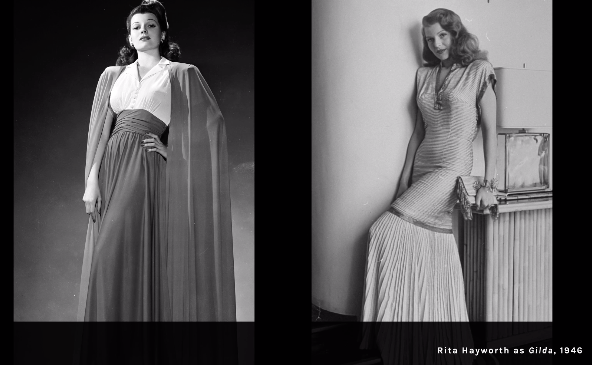
Hollywood was of course still a huge source of influence, Rita Hayworth was one of the top, designers who styled from her look include, Oscar De La Renta, Jean Louis


Saturday, 2 May 2020

FASHION: STYLE ICONS AND CREATING FASHION CHANGES 1930S-70S

COCO CHANNEL AND ELSA SCHIAPARELLI


the two main fashion influencers between the world wars and also huge rivals and utterly different in style. Channel with her simple clean cut designs and Schiaparelli with her often deconstructed ones drawing inspiration from the surrealist artists of the time, with no previous experience in fashion or its construction she created her looks with draping. She befriended and was taught eventually by Poiret, finding getting recognition and making her mark with a feature in vogue, she was helped with her creations by Arminian refugees who sewed her designs, who had created a double lock stick which helped her create her fanciful knit designs and also accredited pithing bringing the use of the zipper into fashion design. she brought quirkiness and humour to her designs easing tensions on the run up to the war, with high end clients such as Wallace Simpson, who was the wearer of the lobster dress. 


Channel on the contrast based hers on a more sporty masculine look seeking comfort and practicality in style, with no need to corsetry, no restrictions or boundaries, using many sport favoured knits in her designs which was underhand of before expect for stockings. 


The 30s was a hard era to dress, leaving the extravagant flapper styles of the 20s into the austerity of the war of the 40s. the constraints of the previous fashions (corsets etc) started with the flapper styles seeking independence, women were more active and sporty now and needed designs that reflected and incorporate this, however the hapless gowns of before were now replaced with ones that enhanced the figure, without confining it. 
fashion illustrations were used in fashion catalogs to promote designs, fashions could be chosen and ordered from home, eg Sears. designs were also influenced heavily by movie stars. it was still common however for people to change clothes a couple times a day depending on activity, however during the depression this habit stopped and was only still done by the upperclass and film stars, though the women that could afford it began dressing in a swankier style during the 1940s, in the wake of Dior and his collection for day and evening with smooth wools and sleek satins,  trimmed with frills furs and feminine details,  fur was exciting popular. 


 the fashion fur style of the 30s was a High collar and lots of overall fluff 


Swedish Greta Garbo became one of the first actresses to move from the silent screen int speaking roles in "the talkies" though unlike the majority of Hollywood, she shred away from the camera and instead sought a quiet life, she was followed for her beauty and style, and heavily scrutinised for her fashion. 

another star of the time German American born actress Marlene Dietrich however was more trailblazing and liked the limelight unlike Garbo, a trendsetter. making bold choices and Grand entrances. she didn't let her sexuality get in the way of making a statement setting the fashion for trousers and more masculine comfortable looks for women. "I dress for myself" 


designers who have taken inspiration from this era include: Carolina Herrera with soften shoulders, Vionnet, Jason Wu, Shoji, Donna Karen, Karl Lagerfield, Fendi