Showing posts with label cullture. Show all posts

Monday, 15 June 2026

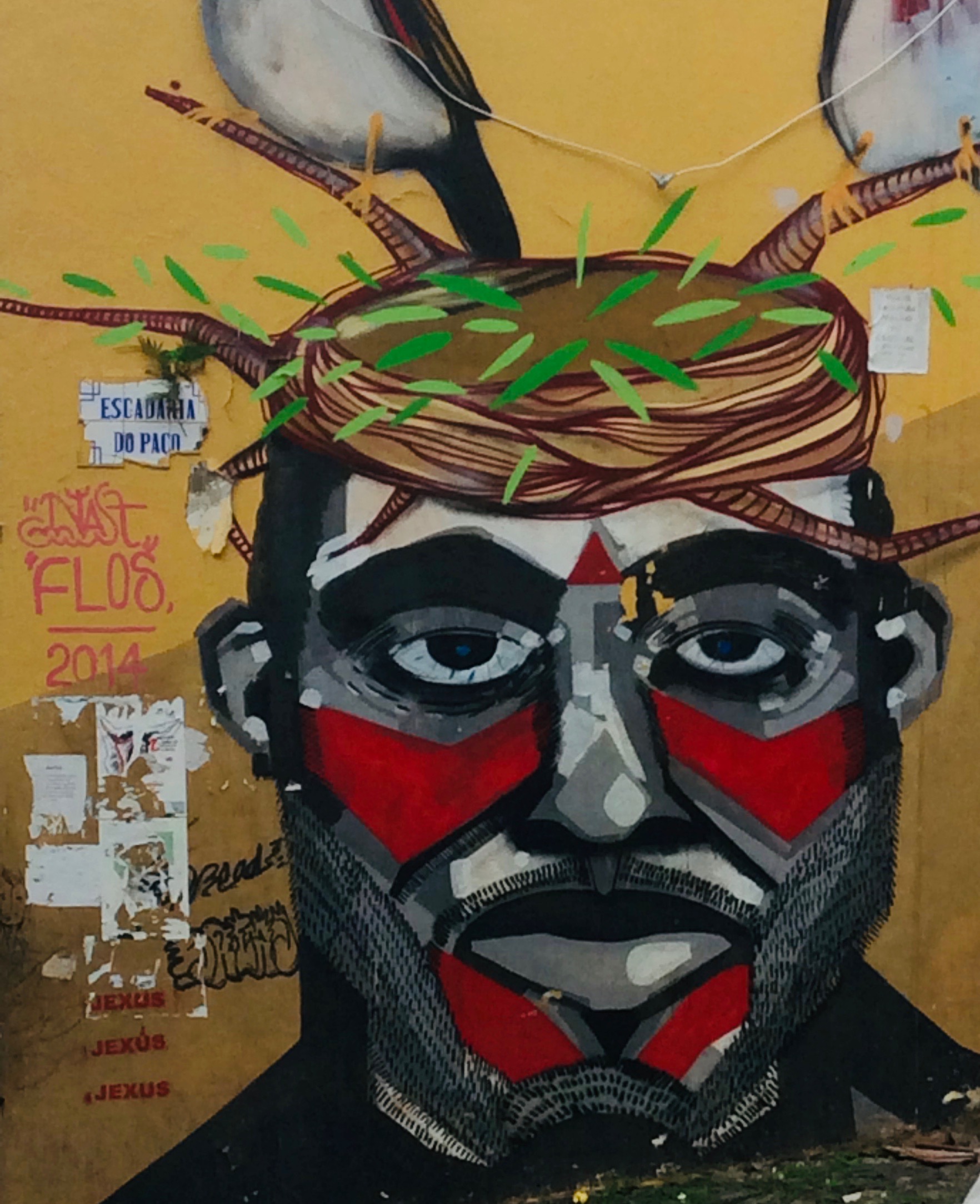
ART: mural wall art in shanghai. Chinese idiom tales


画蛇添足
drawing feet on a snake  
 

                                                 刻舟求剑  Marking the boat to find the sword

                                              https://www.youtube.com/watch?v=WVCH5jFTcdM 

                            铁杵磨成针 grinding and iron pestle into a needle (hard work pays off)

                                       https://www.youtube.com/watch?v=lGInsrmWdc0 

拔苗助长 pull up the shoots to help the grow  (to spoil through impatience or over enthusiasm) 

https://www.youtube.com/watch?v=Y5TIGdaC5JY 

 叶公好龙。 Mr Ye “loves” dragons  (someone loves a certain thing outwardly, but not sincerely - all for show)  https://www.youtube.com/watch?v=xhjyNe1Nv8c


掩耳盗铃 cover your ears and steal the bell (lying to oneself to fool others) 

盲人摸象 blind men touching the elephant (unable to see the full picture) 

  https://www.youtube.com/watch?v=kzWClJXmcdM

愚公移山 The foolish old man who moved mountains  (fierce determination can accomplish anything)

 https://www.youtube.com/watch?v=CN59YrIm-ws

闻鸡起舞 Practice sword at the rooster's crow (diligent and hardworking) 

 https://www.youtube.com/watch?v=KWWB_HhCJ-A

守株待兔 to guard a tree stump waiting for the rabbit (to idly wait for luck or chance rather than to work hard)

https://www.youtube.com/watch?v=Ux6RpgxT6c8


亡羊补牢 mend the fold after the sheep have been lost (better late than never) 

 https://www.youtube.com/watch?v=Z-2ARlRsQHw

 
beautiful murals around huangpu district in shanghai near yu gardens. old lane houses boarded up awaiting renovation  


Sunday, 4 June 2023

LANGUAGE AND TRANSLATION: READING


Reading efficiently

Once you have identified the sources that you think you want to read, go through them briefly to make sure that they are indeed relevant to your studies. There is no point in reading a source comprehensively until you are sure the material fulfils your requirements.


The benefits of reading | DeskTime Blog

Scanning

Scanning is the technique used, for example, when trying to find a name in a phone book. It usually involves running your finger across and down the page to try and identify salient words. By scanning the papers you have accessed you should soon be able to see whether or not they are relevant to your studies. Don't discard those that aren't relevant at this stage. They may be useful later.

Skimming

Skimming is the next stage of the process in deciding whether or not a particular piece is worth reading more thoroughly, as it requires you to engage with the text a little more. There are two levels of skimming.

  • At the basic level you should read the abstract, summary or overview to get an insight into the purpose and the findings of the document, then read the headings and the subheadings to see how the information is organised. By reading any conclusions you can make sure that the outputs from the piece can contribute to your understanding.
  • You may still feel that you need a better understanding of what the authors are trying to do before you read the text in its entirety. Here it may help to read the first paragraph of each section, or even to read the first two lines of each paragraph. Doing this will make it easier to decide whether or not to read the entire text.

Gutting the literature

This approach helps you to analyse how useful a book will be and to select material for a specific purpose. You need to

  • establish and evaluate the value of the book by looking at its aims, introduction, contents and index
  • identify passages that are important to your aims
  • skim read these sections, as well as the ones before to get an idea of context
  • read the chosen sections in depth.

This is a fairly ruthless approach, but one which helps you to be selective.


Reading - Archibald First School


Critical reading

Once you have selected something to read comprehensively it is important that you engage effectively with the text. Before you start, make sure you have thought about why you are reading it and what you want to find out.

Always be ready to make notes as you are reading - in the margins of your study materials, on a separate sheet, or as comments and footnotes to a word-processed document on screen. Limit your use of a highlighter pen to key words only, as if you highlight too much you won't be able to pick out key points. Use sticky tabs to highlight key pages.

The theories you study are not static: they can be agreed with, disagreed with, analysed and engaged with. If you do this while you read you will show the person marking the work you produce that you have a good understanding of the subject as a whole.

Critical reading can be seen as a three-stage process.

  1. Understanding
  2. Questioning
  3. Evaluating

Understanding

Throughout your study you will be exposed to a wide body of academic literature: collections of theories, concepts, models and frameworks. The theses they advance need to be understood in their own right and in terms of their relationship with the associated literature.

Start your critical reading by considering who devised a particular thesis, and when, to get an insight into the academic approach taken by the author. For example, some authors approach their subject area from theoretical perspective, others seek practical applications for their work, or their contribution is to the wider academic debate. Recognising who produced the thesis gives you an insight into the position from which they are writing.

Knowing when the work was produced gives you a feel for the time relevance of the thesis. That is not necessarily to dismiss the relevance of older theses to contemporary studies, rather to review their relevance and recognise the platform they may provide for contemporary theses.

The next step is to identify the central claim or claims of the thesis. Finding the central claim reveals what the thesis is saying, trying to prove, or argue. Use the points listed below to help probe the thesis for this information.

  • What is the thesis trying to say? How successfully does it say it?
  • Is the thesis graphically represented, if so how does this look?
  • What are the key points or the component parts of the thesis?
  • What are the relationships between these points or parts?
  • What is the relevance of the thesis?

A further useful step in establishing your understanding of a thesis is to discover the reasons for producing it. Often you can see how a particular thesis has been shaped by looking at why it has been produced. For example, where the motivation is to produce a thesis which has practical relevance you might expect an emphasis on quantitative methods. The author might use measurement as a means of demonstrating the validity of their thesis. Alternatively, where a thesis is devised to contribute specifically to academic debate then the emphasis may be on discursive accounts rather than verifiable statistics.

Once you have established your understanding of these points you are much better positioned to start asking more probing questions.

10 Benefits of Reading Books: Why You Should Read Every Day

Questioning

The core of a thesis is formed by the central claims made by the author, as identified above, and the ways in which these assertions are presented. You should question these claims to examine whether they are based on a strong argument - one that demonstrates their development from a clear grounding in the academic literature.

  • Are the claims argued using reasoning and debate?
  • Are they substantiated with evidence from primary or secondary sources?

You may discover that the claims are based on a weak argument, offering no more than a list of assertions with no rational explanation or justification, and insufficient grounding in academic literature. In these cases the narrative tends to be unilateral and value-laden, and the resultant thesis is skewed towards presenting a specific view.

You should note that these characteristics of strong and weak presentation of a thesis apply equally to the work that you submit.

Evaluating

By this stage you have an understanding of the thesis, what it entails and why it was written. You have considered the strengths and weaknesses of how the central claims are argued, and their grounding in academic rigour. You will be aware of the sense of balance in the supporting debate and the relevance or accuracy of the evidence presented.

Evaluating the thesis is the point at which you draw your own conclusions about the value of the work presented. Your evaluation should be based on an assimilation of contradictory and supportive evidence from within the thesis itself, from the surrounding literature and from your own considerations.

In formulating your conclusions it is worth thinking about the following points.

  • The robustness of the arguments for the thesis
  • The robustness of the arguments against the thesis
  • The circumstances in which the thesis could be useful
  • The circumstances in which the thesis would be less useful
  • Any amendments to the thesis that would be useful in the context where you would apply it

It can take time and effort to develop skills in critical reading, but the more you do the more you'll find the stages described above become an automatic approach. Critical reading skills are essential if you are to be able to gather and process evidence to support your own views, which is what we move onto next.


Gathering and processing evidence

In postgraduate study there is usually an emphasis on gathering evidence to examine or support a point of view. This may be as part of a research project where you are asked, for example, to review recent academic literature, or you may need to gather your own data by using a questionnaire or running an experiment.

Once you have your evidence you are expected to make some analysis of it and then write up your findings, perhaps as a project report for an assignment or as a dissertation.

Academic ethics

Ethical considerations play an important part in many research projects, particularly if you are gathering material from people by means of interviews, observations or questionnaires. Taking ethics into account when designing a research project helps to ensure that participants are aware of the aims of the research and what will happen to the information gathered.

It is important that you check whether or not you need ethical clearance to carry out your research. If you think you do, you will need to complete an ethics application and submit it to the OU. Your tutor and study notes will tell you more about how this might relate to your area of study.

One of the most important ethical principles is that of informed consent. You should supply participants with an information sheet describing the purpose of the research, how confidentiality is managed, what the results will be used for and how it will be published, and then obtain their consent.

Thinking about the ethical implications of your research also helps to ensure the well-being of you and the participants.

  • The safety of you and your interviewee: Are other people aware the interview is taking place and when you are due to finish? Do they have contact numbers? Do you have a clear exit from the building in which it is taking place? Does your interviewee?
  • The emotional context of an interview: Will the issue raise emotional issues? If so, what is your strategy for dealing with them?
  • Data protection: What will you do with your questionnaire data? Do you have a safe place to store it? Do you know how long you can store it for?

Academic ethics also include a responsibility for accuracy in reporting your findings and in reporting and quoting from the research of others, particularly in regards to plagiarism.


Problem solving

Thinking creatively is a great way to solve a problem, such as working out how to design a project, or examine a question you need to answer. If you 'think around' the subject you can generate the answer or more easily understand the topic. Here are some ways of thinking creatively that may help you make decisions on what evidence you might need to collect.

Brainstorming

Brainstorming is a way of generating ideas. It is a good method to try if you are attacking a specific problem, whether alone or as part of a group.

  • You need to think freely about the subject at hand. If you were brainstorming the pros and cons of 'green thinking' for example, you would jot down ideas as you or the group thought of them. There would be no judgement of the ideas at this stage
  • You then work with the ideas: can any be improved? Do they lead you to another idea? If working in a group, a moderator would lead this discussion
  • Once several ideas have been generated, you sift through them to see which work and which don't.

This short YouTube video shows you exactly what NOT to do when brainstorming in a group.

Idea-generating questions

Here you would ask questions about the subject at hand. Namely

  • Who?
  • What?
  • When?
  • Where?
  • Why?
  • How?

These questions would then lead on to other questions, or a wider examination of the subject.

Shifting perspective

Here you try and look at things from another point of view.

  • If you are female, what might a male perspective be? Would it be different? Why?
  • If you are looking at a conservative argument, what might a liberal view be?
  • If you were examining something scientifically, how would a social scientist approach the situation? What methodology would they use? What theory would they engage with?
  • If you are looking at something in detail, try to step back and see it from a broader perspective, and vice versa.

This is a good method to use where you want to see both sides of a theory or find out more about something. It also helps you to move away from your own opinion, which could be biased or lacking in information.

Tuesday, 14 March 2023

translation: Work placements and internships

TRANSLATION - Work placements and internships


gaining some practical experience in translation is important to start a new career in translation or localisation  volunteering,  work placements and internships can help with this.

Although you might be starting your career now, it is more likely that you might already have years of work experience behind you. So, you might be wondering if work placements or internships are appropriate for you, or even feasible? You might have decided that they are not, but perhaps you should reconsider.

Whatever your background and your expectations of translation or localisation, it is useful to research it, as you might find some useful information about the translation industry and discover jobs that you might want to consider. 

Work experience

So, why is work experience important?  why is work experience useful and what do  employers think about it? Do mature students have an advantage?

many recruiters say::

mature students have extra experience which puts you at an advantage to someone who has gone straight from school to university. Your commitment, ambition, and drive will be noted as long as you are prepared to talk about your choice/change of career path. 

So, if you already have experience in a different field, it is important that you are able to articulate why it is you have decided to change careers.

Internships and work placements are a very interesting way to get to understand first-hand what jobs are involved in the translation industry, and how large language service providers (LSPs) operate. 

Building your work experience can help you:

  • Decide what career paths you want to explore and make contacts who can help you in your career.
  • Enhance your CV and develop your transferable and employability skills.
  • Get a realistic idea of the responsibilities, skills and challenges of different types of roles and gain insight into different sectors.

Different types of work experience

Internships

An internship is a fixed-time work experience placement which gives you a chance to enhance your employability and career prospects. Graduate internships may be full or part-time and can last between a few weeks and a few months. Some internships are paid, and some can be done remotely.

Secondments

Secondment is temporary paid work in a different area from where you usually work.

Placements

Work placements are a period of work experience that is part of your degree. They give you the chance to apply your skills in a work setting.

Insight programmes and open days

Insight days and programmes usually involve a range of activities such as work shadowing, networking and presentations with the option to meet subject matter experts and ask questions.


How to Put Together an Effective Localisation Kit

Other options 

Another way to learn about opportunities, job sectors and a way to get your ‘foot in the door’ is to look for paid employment, such as:

  • temporary roles
  • junior positions
  • portfolio working
  • freelancing
  • project work

If you are looking to change your career you could consider applying for ‘junior’ or ‘assistant’ positions to develop your sector knowledge ‘on the job’.

How to get work experience if you're already in work

If you’re working or have other commitments it can be difficult to take on a placements or secondment, especially if you’re looking to change careers or sectors. Consider other options such as volunteering, portfolio working or using annual leave for short-term projects.


A Year of Work Experience - CSW Group Ltd.

Finding work experience

like job opportunities, work experience opportunities can be advertised or organised informally.

Make sure any work experience you arrange suits your career plans and what you can realistically achieve. Be clear about your career aims and how they fit with those of the employer.


Find 'hidden' work experience opportunities

Not all work experience opportunities are advertised or are even formal opportunities. For example, some small and medium size enterprises may rely on word of mouth or speculative approaches.

  • Exploit existing opportunities at work – if you’re already working, you may find you can volunteer or do work experience in a different role with your current employer.
  • Network – make it known to your contacts that you’re looking for work experience.
  • Follow companies on social media to keep up to date with what they are doing.
  • Making the most of your work experience

    When you’re looking for opportunities, consider what you want to get out of the experience and your own circumstances.

    Good employers will provide quality experience that will develop and support students and graduates. You should be able to carry out ‘real’ work and projects to help you enhance your employability and academic skills.

    What to do during the experience

    • Make sure you have a mentor or supervisor to contact if you need to.
    • Ask for feedback during or after completing your placement.
    • Be proactive and seize opportunities to make contacts and network with colleagues.

    What to do after the experience

    • Ask for feedback after completing your placement.
    • Thank the organisation and mentor for the opportunity.
    • Reflect on your roles, activities and projects.
    • Note down any outcomes and results.
    • Update your CV with your work experience details.
  • 7 Steps to Kick-Start Website Localisation - Locate Translate

Wednesday, 21 December 2022

TRAVEL: BRAZIL RIO DE JANIERO & Salvador

BRAZIL 2015


I flew to 
São Paulo as cheaper then got a bus to Rio de Janeiro which took 6+hours 
with a stop for toilet and food. we got it late afternoon arrive later in the night to Rio
and got a taxi to the hostel.  buses tend to run every2 hours starting at 8am with
the last bus at 8pm from 
São Paulo Bus Station - to Terminal Tietê in Rio costing R$91.00 to R$423.00 
https://12go.asia/en/bus/sao-paulo/rio-de-janeiro
there are plans for a train but it is yet to be completed (maybe 2025) and once complete the journey would only take 1h25


When I went it was summer (August) but in Brazil it is their "winter" season which means it's not crazy hot, usually it's 
dry weather throughout most of the country. On the coastline around Rio de Janeiro, and in the city center, the weather is pleasant with temperatures around 18-28'c 
the first day was spent on the famous 
copacabana
https://theculturetrip.com/south-america/brazil/articles/the-top-10-things-to-do-and-see-in-copacabana/

you don't need to move, people come to you, shouting their wares "Açaí" "caipirinha"  "coco" or they might come up to you and ask if you are looking for something a bit more exclusive ;)  the waves are huge, a good place for surfing, not so much swimming. 


later, in the afternoon we climbed part of sugarloaf mountain spotting some cute animals on our journey and then got the cable car to the top (Pão de Açúcar) and later to the Jesus (Christ the Redeemer / Cristo Redento), the colossal statue of Jesus Christ at the summit of Mount Corcovado with outstretched arms embracing the city


SUGARLOAF MOUNTAIN 


Weird animal spots from the hike / cable car 


marmoset monkey chilling in the trees 


Cristo Redento - Christ the Redeemer 


we  did a free walking day tour the second morning which was really good! there are many to choose from online 

there were about 15-20 people on the tour, all from different speaking countries, the tour was performed in English but there are tours in different languages on certain days/times/tour groups (you can also go on a paid tour but we choose a free walking tour were you volunteer to donate some money at the end as the guides themselves are volunteers) 


Teatro Municipal (Municipal Theater) 

built in the early 20th century, and inspired by the Paris Opera of Charles Garnier,  its interior is even more ornate and luxurious than the dramatic towered façade.(though we didn't get to see as we didnt entrust passed it on the tour) it contains sculptures by Henrique Bernardelli and paintings by Rodolfo Amoedo and Eliseu Visconti, the drop curtain, the proscenium frieze, and the ceilings are also worth seeing.


Cinelandia Square 


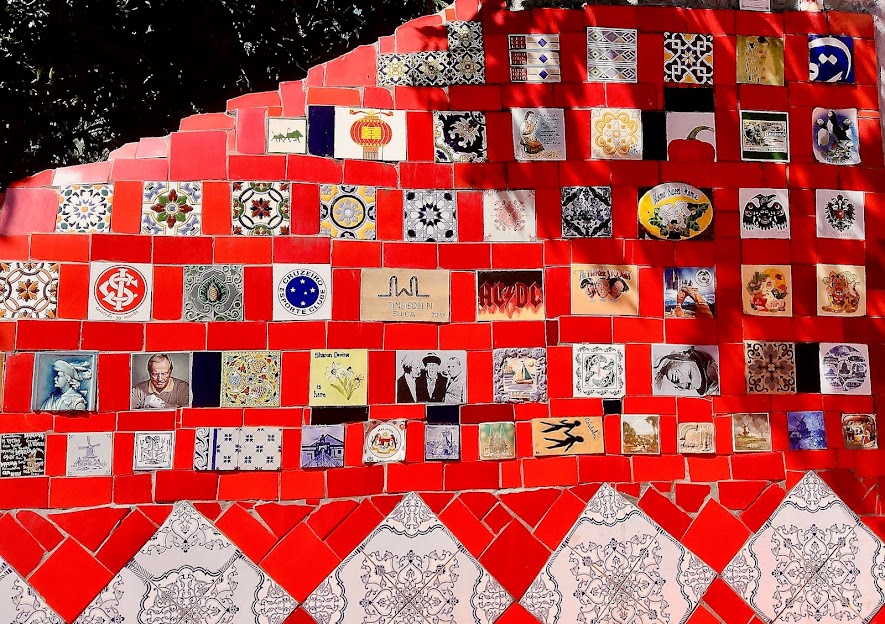
Santa Tereza church established 1720 and Escadaria Selarón


From 1990 until his death in 2013, Chilean-born artist Jorge Selarón covered these long flight of steps in front of his house with mosaics made of tiles, pottery, and mirrors. (many in blue, green, and yellow - colors of the Brazilian flag.) He began by using broken tiles from construction sites and demolitions of old buildings,  as his steps drew the attention of tourists, people began bringing him pottery and tiles from all over the world.There are pieces from more than 60 countries within these 250 steps, which cover 125 meters of stairs.


AQUADUCT

Catedral de São Sebastião


Jardim Botanic

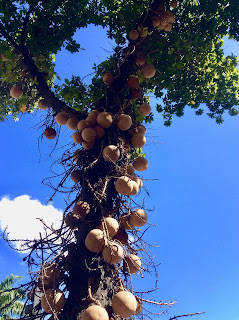
Botanic Garden in Rio de Janeiro was founded more than 200 years ago (in 1808)。 open 9am - 6pm 15R entrance fee. I went in the afternoon on a weekday and it was pretty quiet, its quite big and really nice for a pleasant stroll with lots of plant life, flowers, monkeys, insects and bird too. The Christ statue can be seen too in the background. definitely worth a visit if you have the time! 

https://theculturetrip.com/south-america/brazil/articles/jardim-botanico-a-guide-to-rios-most-beautiful-garden/


NEXT STOP......

SALVADOR
 

best to go by flight as its 24h+ by car/bus. we got the bus to the airport around rush hour TERRIBLE idea, so many cars. we ended up getting a taxi halfway there as we missed a bus and the next wasn't for ages. we nearly missed the flight!! thankfully we didn't and got to Salvador late that night. staying in a small hostel in a private room with bunk beds. very quiet. up in the hillside old town. but a very different vibe from Rio from the start.

Lacerda Lift

 dating back to the 17th century when an old pulley system was put in place here to help move objects from the Lower City to the Upper City. 

The art-deco elevator that is standing today was built in the 19th century. It has many improvements through the years, and it can now up to 32 people in each elevator for a 30 seconds trip! 


São Francisco Church

first established 1587

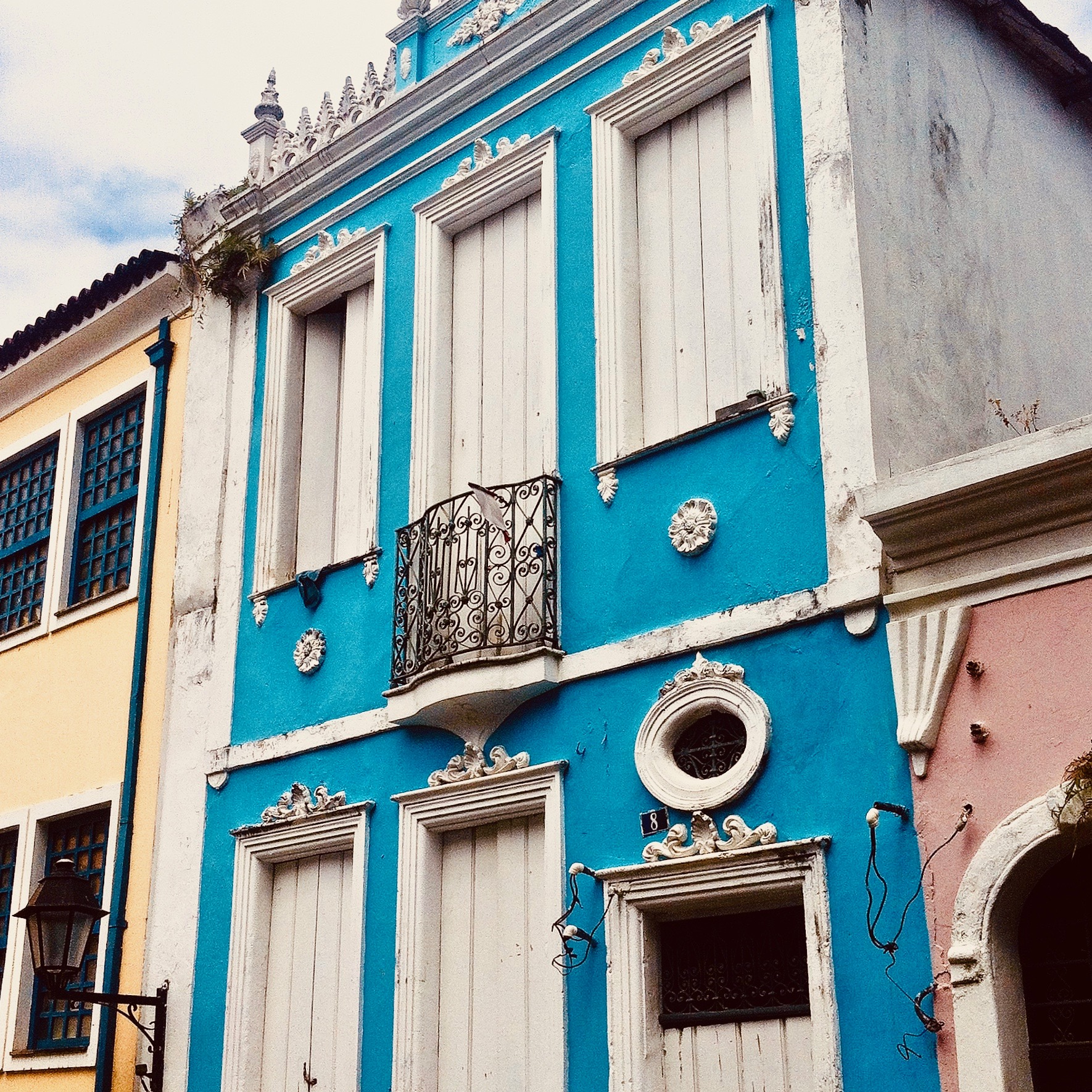
Salvador, the capital of Brazil’s northeastern state of Bahia, is known for its Portuguese colonial architecture, Afro-Brazilian culture and a tropical coastline. its historical quarter up on the hils is full of cobblestone alleys opening onto large squares, colorful buildings and baroque churches such as São Francisco, and looks down over the bay. the city is nearly 500 years old (found 1549)  and was the former Portuguese colonial capital of Brazil.


Pelourinho

Now a UNESCO World Heritage Site together with the historic city center because Salvador is notable as one of the major points of convergence of European, African, and American Indian cultures of the 16th-18th centuries.


The local guide leads you through the streets of downtown and Pelourinho explaining these places’ culture, history, and role in the African slave trade. many of the women even wear their traditional dresses  

Baiana de Acarajé traditional dress is a blend of European Baroque (white lace details & multiple layers) with vibrant tropical jewellery and headdress's (Afro-Islamic roots) maybe not the most practical clothes for Bahia’s climate, but it's an impressive look. The dress consists of the camino, which are white cotton pants worn underneath a long, flowing skirt – a usually white, long, voluminous skirt and a bodice that gathers at the waist and then typically hangs over the top of the skirt. The women wear layered headscarves (also usually white and often made of lace), which is finished off with each woman adding her own signature style to the outfit. An abundance of jewelry: colorful bead necklaces and rings are layered upon the fabric, completed with heavy drop earrings and stacks of bangles - beautiful adornment

Senhor do Bonfim Church
built 18th century.  lots of people have ribbons tied around their wrists. These ribbons are called wish ribbons which initially started with the Senhor do Bonfim Church. 

People tie these ribbons in hopes of them helping to cure and aid their issues and sicknesses.


the house that Michael Jackson stayed 

the House of Jorge Amado Foundation


Pierre Verger Foundation 

Barra Lighthouse


 the lower part of the town is more run down and neglected, forlorn and forgotten with only traces of its  previous beauty and richness remaining.  
Salvador has a forlorn lost beauty to it. lots of old stately buildings dirty, abandoned and in disarray, a poor facade remains of its once luxurious grandeur 

A costal city, you can visit the beach or check out the port, you can even do boat trips to other islands. 


  Church and Convent of Our Lady of Mount Carmel. 


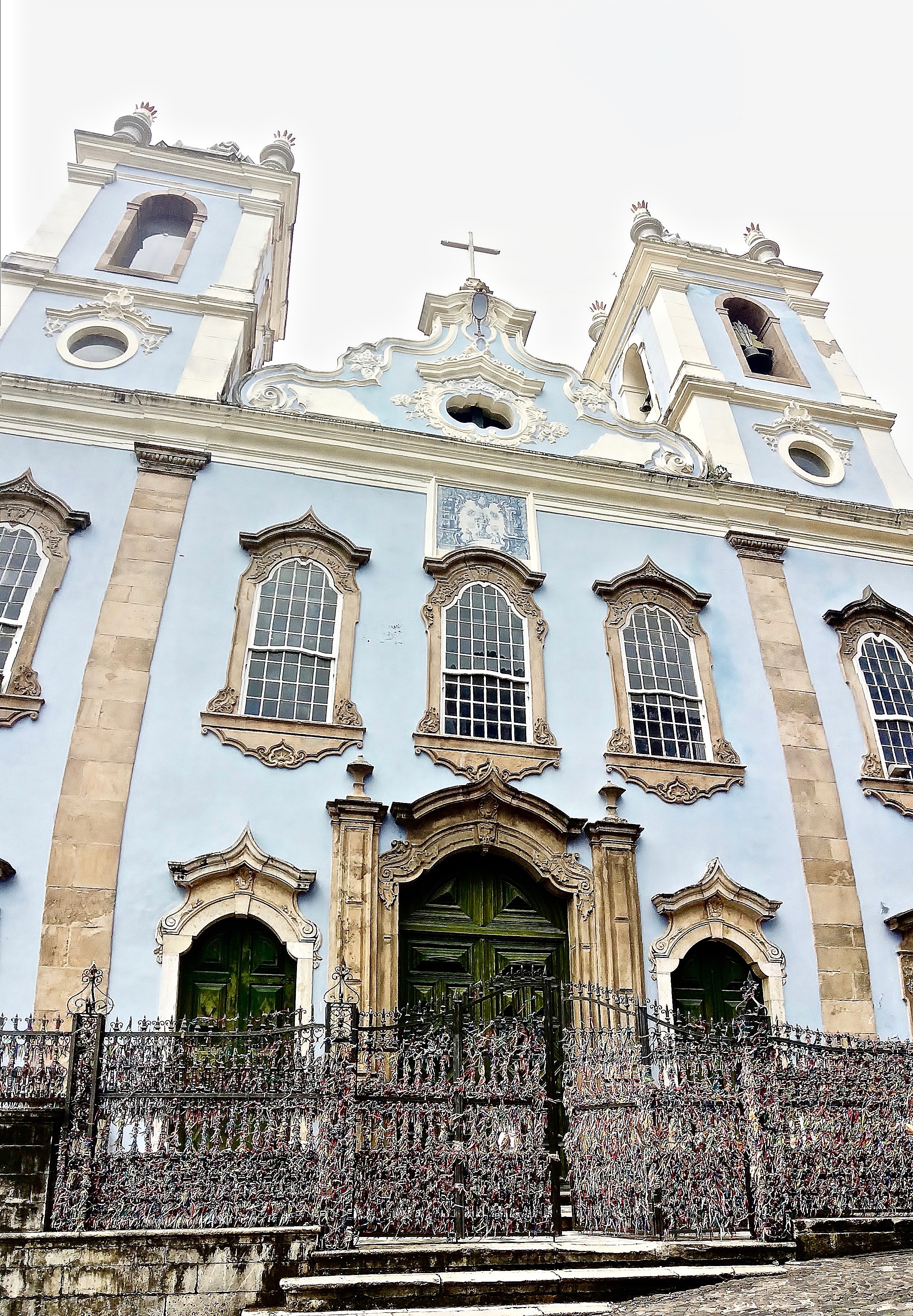
The Church of Our Lady of the Rosary of the Black People


 Rio Branco Palace was built in the 16th century and is an essential museum in Salvador. It’s one of Brazil’s oldest palaces and is a truly magnificent piece of architecture. 


SALVADOR TO MORRO DE SAO PAULO 

The easiest way is to take a ferry or catamaran from the Mercado Modelo in Salvador to Morro de São Paulo. The ferry costs R$ 75 and the catamaran R$ 80 and they take approximately two hours. Since you are travelling on the open ocean, seasickness pills are advised. Tickets can be bought at the boat terminal building. It's best to not travel on a full stomach, better if empty or have a least waited an hour or two before travelling as its very choppy. you can take the "speed boat" or local boat. we took the speed boat over - it's a little dearer but has less people and a little more comfortable though people still got seasick. We took the normal boat back, sitting underneath. there were several people lying down on the benches and throwing up into the bags provided. not so fun. 


it was sunny when we got there, there are many different restaurants along the beachfront. we took a stroll and explored the local area, up onto the hills overlooking the bay and exploring more private beach areas. later on returning to the beachfront and relaxing. we even made friends with a local dog who joined me for a while (a golden retriever type) we left before sunset as the weather had started to change and was raining a little, we got a local boat that took us to the dock to head home. A nice little day trip.